Leading the GI Robotics Revolution
Colorectal cancer is the 2nd leading cause of cancer death in the U.S. and increasingly affects adults under age 50. Colonoscopy is considered the gold standard as it allows for both detection and polyp removal in one session.
Our vision is to elevate physicians performing colonoscopy by providing them with greater stability and precision – with the potential to influence outcomes – through robotics and AI.
Leading the GI Robotics Revolution
Colorectal cancer is the 2nd leading cause of cancer death in the U.S. and increasingly affects adults under age 50. Colonoscopy is considered the gold standard as it allows for both detection and polyp removal in one session.
Our vision is to elevate physicians performing colonoscopy by providing them with greater stability and precision – with the potential to influence outcomes – through robotics and AI.
Current Limitations with Colonoscopy

High adenoma miss rates and low adenoma detection rates (ADR) lead to cancer
-
Up to 30% of adenomas can be missed1
-
Every 1% increase in ADR reduces interval cancer rate by 3%2
-
The American Society of Gastrointestinal Endoscopy (ASGE) ADR thresholds have risen from 25% to 35%3

Poor endoscope control creates challenges in therapy
-
A 17% incomplete resection rate for large polyps leads to a 30% post-colonoscopy cancer rate4
-
ESD learning curve is 6-8 years5
-
Less than 1% of endoscopists are skilled in complex therapy5

Endoscopy related injuries (ERI) are common and decrease capacity
-
68% of GI endoscopists report musculoskeletal injuries due to ergonomic strain6
-
1 in 5 endoscopists has required time off due to ERI7
-
ERIs reduce capacity by 12-18%8
Our Technology
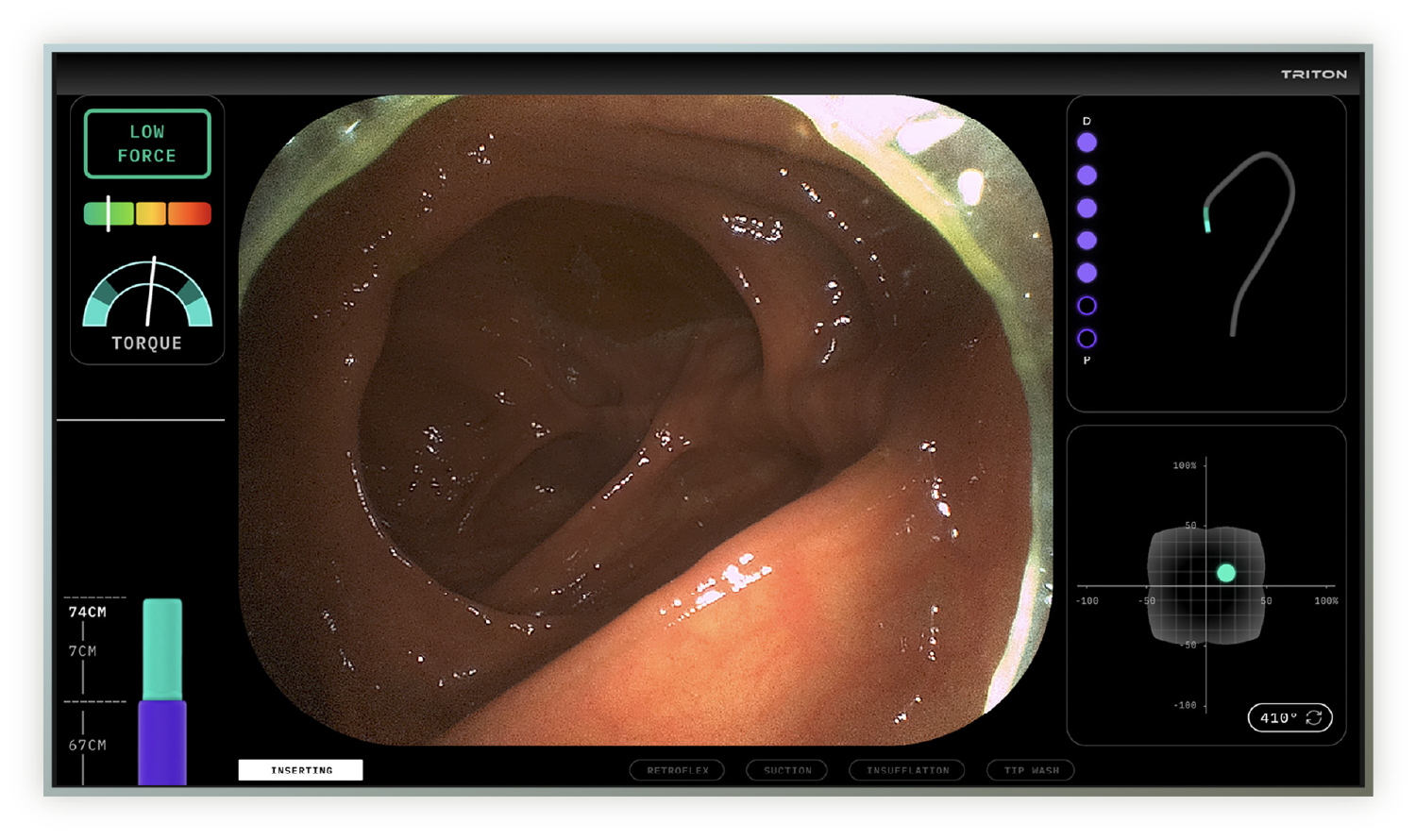
Our newest breakthrough, Triton, is a transformative GI robotic endoscopy system designed for easy and comfortable navigation, excellent precision, and control throughout the entire colon.
We are combining robotics and AI in an ergonomic design for gastroenterologists, to elevate their capabilities for screening, surveillance and diagnostic colonoscopies, endoscopic mucosal resections (EMRs) and endoscopic submucosal dissections (ESDs) in the lower GI tract.
The device is not available for sale within the United States, the European Union or the rest of the world.
ENCOURAGING EARLY STUDY OUTCOMES
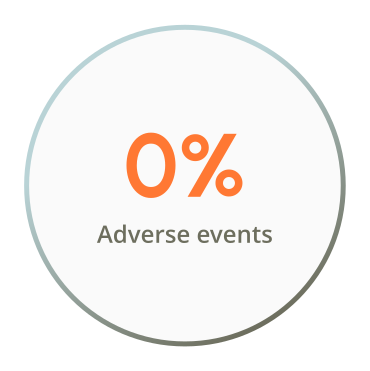
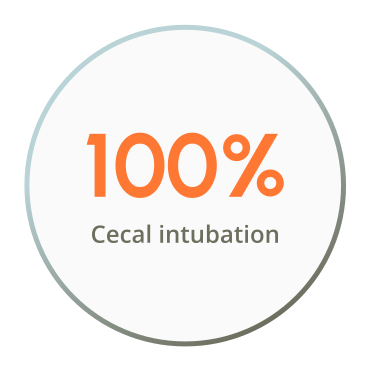
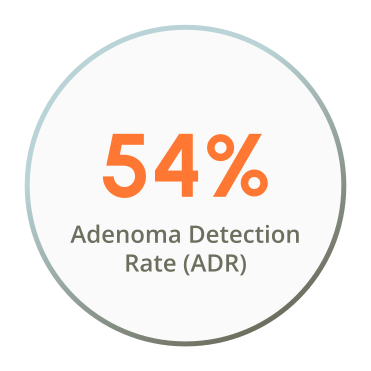
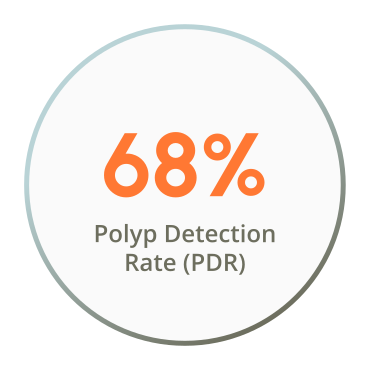
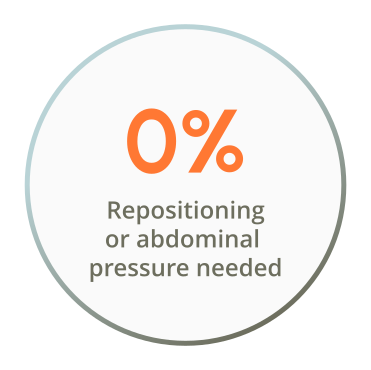
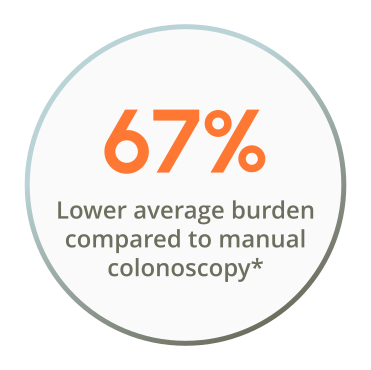
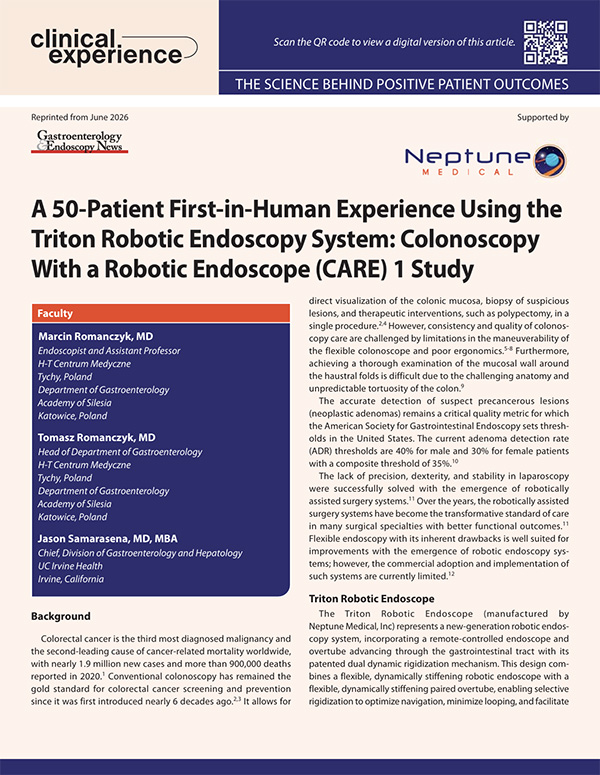
CARE 1 First-in-Human Study9
50 patients
Publications
Click to view
*Based on scores measured using NASA Task Load Index
REFERENCES
- Adenoma Miss Rates: https://www.gastrojournal.org/article/S0016-5085(19)30360-9/fulltext
- 1% Increase in ADR to 3% Decrease in ICR: https://www.nejm.org/doi/full/10.1056/NEJMoa1309086
- ASGE Guidelines: https://www.asge.org/home/resources/publications/guidelines
- Incomplete Resection Rates During Colonoscopy: https://www.gastrojournal.org/article/s0016-5085(12)01443-6/fulltext
- ESD Learning Curve: https://pubmed.ncbi.nlm.nih.gov/31220645/
- Endoscopy Related Musculoskeletal Injuries: https://pmc.ncbi.nlm.nih.gov/articles/PMC12269738/
- ASGE Ergonomics: ASGE Ergonomics for Endoscopy Team Page
- ERI causing capacity constraints: https://pubmed.ncbi.nlm.nih.gov/35649298/
- Data on file
Neptune Medical Inc.
1828 El Camino Real, Suite 508
Burlingame, CA 94010
For company information:
info@neptunemedical.com
For job inquiries:
careers@neptunemedical.com